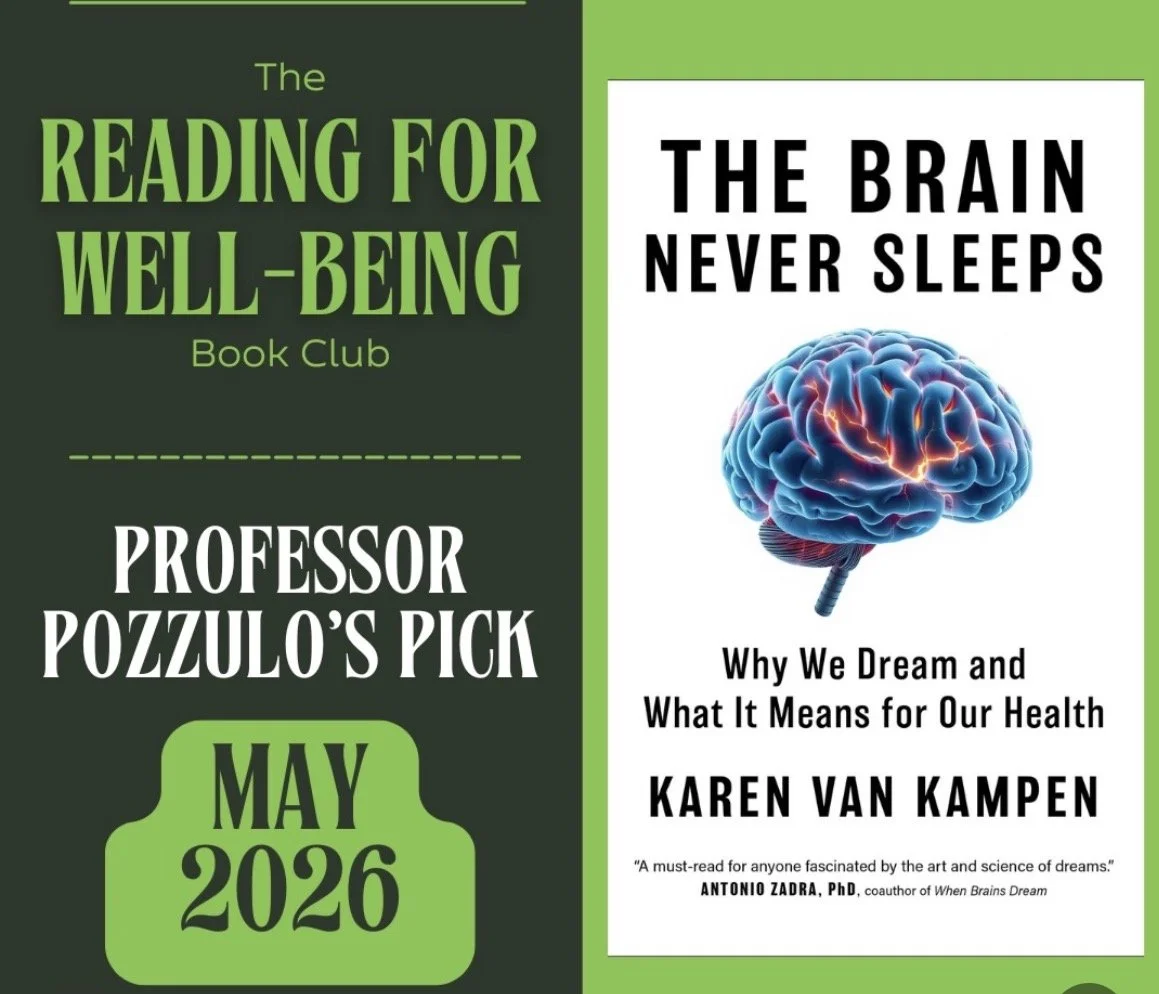

I’m excited that The Brain Never Sleeps is a book club pick! Ever wonder how dreams are made, why dreams are good for us, or how we can use our dreams to improve our waking lives? Explore these questions with me in The Brain Never Sleeps!
Book Club Questions
Freud believed that time doesn’t exist in the dream world. How can dreams of the past give new insights into the present and the future?
Can dreams be nonsensical and meaningful at the same time? What can we learn from the fictions of our dreams?
Our thoughts as we fall asleep can shape our dreams. What if we were more intentional in the content we consumed before bed?
What is the NEXTUP model of dreaming? How do dreams connect recent experiences with moments deep in our past to strengthen new memories?
How do dreams help us prepare for life’s dangers in their many forms, from escaping a predator to searching for our lost phone?
Why do recurrent bad dreams live on? How can we stop them?
Often, we dream of things that are unsettled in our mind. How can this be good for us?
How do anesthesia dreams allow people to rewrite traumatic memories while they are in a dreamlike, relaxed state? What are the therapeutic possibilities of incorporating five extra minutes under light anesthesia into recovery?
How can lucid dreaming be used to cultivate a calm mindset and improve well-being?
If you could guide your dreams using voice recordings, would you want to? Why?
What are key issues around dream advertising? How might companies use the dream state to sway consumers?
How can sharing our dreams boost empathy and connection with others?
How can dreams help us be more creative and innovative in waking life?
We can go about our lives never giving dreams a second thought. Why do dreams matter?
Book Club Activities
Keep a dream diary for two weeks leading up to your book club meeting. Indicate any connections between dreams and waking life. Did any concerns, themes or people reappear?
Think of a powerful dream that you can’t shake. Use the tool kit in The Brain Never Sleeps to have your own dream sharing session and gain new perspectives on your dreams.
Try to rewrite a recurrent bad dream. Think of the dream during the day. Rescript the frightening parts. For two weeks, spend two minutes a day to practice your new dream. The next time you have the bad dream, see if you’ve given yourself another way out.
Test out other dream tools and techniques in the Dreamer’s Toolkit at the back of The Brain Never Sleeps. Share your experiences with the group.